
Panagiotis Peikidis
I am a polyglot software developer and technical consultant based in New York, USA.
'%3e%3cpath%20d='M15,3c-6.627,0%20-12,5.373%20-12,12c0,5.623%203.872,10.328%209.092,11.63c-0.056,-0.162%20-0.092,-0.35%20-0.092,-0.583v-2.051c-0.487,0%20-1.303,0%20-1.508,0c-0.821,0%20-1.551,-0.353%20-1.905,-1.009c-0.393,-0.729%20-0.461,-1.844%20-1.435,-2.526c-0.289,-0.227%20-0.069,-0.486%200.264,-0.451c0.615,0.174%201.125,0.596%201.605,1.222c0.478,0.627%200.703,0.769%201.596,0.769c0.433,0%201.081,-0.025%201.691,-0.121c0.328,-0.833%200.895,-1.6%201.588,-1.962c-3.996,-0.411%20-5.903,-2.399%20-5.903,-5.098c0,-1.162%200.495,-2.286%201.336,-3.233c-0.276,-0.94%20-0.623,-2.857%200.106,-3.587c1.798,0%202.885,1.166%203.146,1.481c0.896,-0.307%201.88,-0.481%202.914,-0.481c1.036,0%202.024,0.174%202.922,0.483c0.258,-0.313%201.346,-1.483%203.148,-1.483c0.732,0.731%200.381,2.656%200.102,3.594c0.836,0.945%201.328,2.066%201.328,3.226c0,2.697%20-1.904,4.684%20-5.894,5.097c1.098,0.573%201.899,2.183%201.899,3.396v2.734c0,0.104%20-0.023,0.179%20-0.035,0.268c4.676,-1.639%208.035,-6.079%208.035,-11.315c0,-6.627%20-5.373,-12%20-12,-12z'%3e%3c/path%3e%3c/g%3e%3c/g%3e%3c/svg%3e)
'%3e%3cpath%20d='M4.60588%209.45456H4.12103C3.20679%209.45456%202.74968%209.45456%202.46566%209.74425C2.18164%2010.034%202.18164%2010.5002%202.18164%2011.4327V19.84C2.18164%2020.7725%202.18164%2021.2388%202.46566%2021.5285C2.74968%2021.8182%203.20679%2021.8182%204.12103%2021.8182H4.60588C5.52012%2021.8182%205.97724%2021.8182%206.26126%2021.5285C6.54528%2021.2388%206.54528%2020.7725%206.54528%2019.84V11.4327C6.54528%2010.5002%206.54528%2010.034%206.26126%209.74425C5.97724%209.45456%205.52012%209.45456%204.60588%209.45456Z'%20stroke='white'%20stroke-width='1.5'/%3e%3cpath%20opacity='0.4'%20d='M6.54528%204.36364C6.54528%205.56863%205.56844%206.54546%204.36346%206.54546C3.15847%206.54546%202.18164%205.56863%202.18164%204.36364C2.18164%203.15866%203.15847%202.18182%204.36346%202.18182C5.56844%202.18182%206.54528%203.15866%206.54528%204.36364Z'%20stroke='white'%20stroke-width='2'/%3e%3cpath%20d='M12.2493%209.45456H11.4323C10.4998%209.45456%2010.0335%209.45456%209.74379%209.74425C9.4541%2010.034%209.4541%2010.5002%209.4541%2011.4327V19.84C9.4541%2020.7725%209.4541%2021.2388%209.74379%2021.5285C10.0335%2021.8182%2010.4998%2021.8182%2011.4323%2021.8182H11.9268C12.8593%2021.8182%2013.3256%2021.8182%2013.6153%2021.5285C13.905%2021.2388%2013.905%2020.7725%2013.905%2019.84L13.9051%2016.3783C13.9051%2014.7396%2014.4273%2013.411%2015.9701%2013.411C16.7414%2013.411%2017.3668%2014.0753%2017.3668%2014.8947V19.3456C17.3668%2020.2781%2017.3668%2020.7443%2017.6565%2021.034C17.9461%2021.3237%2018.4124%2021.3237%2019.3449%2021.3237H19.8382C20.7705%2021.3237%2021.2367%2021.3237%2021.5264%2021.0341C21.8161%2020.7445%2021.8162%2020.2784%2021.8164%2019.3461L21.8177%2013.9057C21.8177%2011.4476%2019.4798%209.4548%2017.1658%209.4548C15.8484%209.4548%2014.6732%2010.1005%2013.9051%2011.1103C13.905%2010.4871%2013.905%2010.1755%2013.7697%209.94416C13.6839%209.79764%2013.5619%209.67565%2013.4154%209.58994C13.184%209.45456%2012.8725%209.45456%2012.2493%209.45456Z'%20stroke='white'%20stroke-width='1.5'%20stroke-linejoin='round'/%3e%3c/g%3e%3cdefs%3e%3cclipPath%20id='clip0_8679_11877'%3e%3crect%20width='24'%20height='24'%20fill='white'/%3e%3c/clipPath%3e%3c/defs%3e%3c/svg%3e)

© 2026 pekalicious. All Rights Reserved.
The History of Light
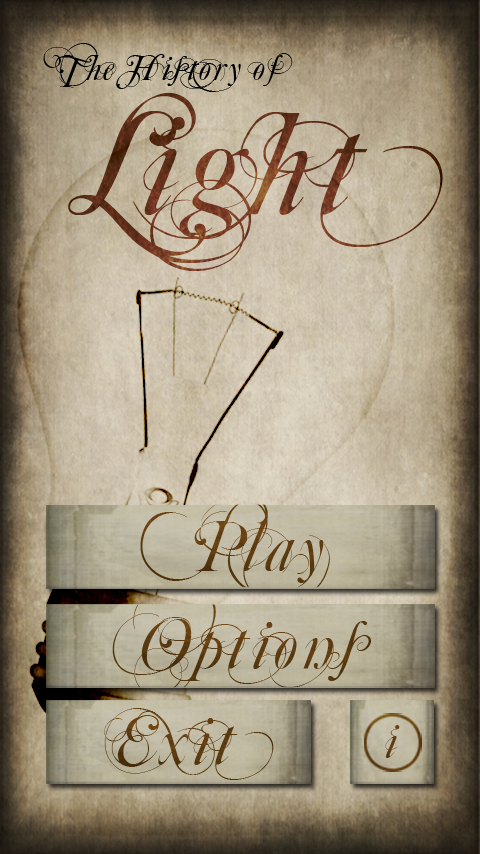
The History of Light was a puzzle game released by BossCastle Studios. The core concept was inspired by Lights Out: the player is given a grid of lights and must turn every light off, but each interaction affects multiple cells depending on the current world's rule set.
This page captures the v1.3 release, which expanded the game significantly. The update added two new worlds, brought every world up to 30 levels, and increased the total puzzle count to 210 levels. It also deepened the progression model by tying unlocks to star performance, pushing players to solve efficiently rather than simply finishing levels.
Overview
The game is built around a simple interaction model with compounding puzzle complexity. Clicking a light toggles it on or off, but the surrounding behavior changes from world to world. That let the game start from an immediately understandable rule set while steadily layering more demanding logic on top.
The History of Light
Progression and World Structure
The release version contains seven worlds, each themed around a milestone in the history of light: Sun, Fire, Candle, Kerosene, Incandescent, Fluorescent, and L.E.D..
Each world contains 30 levels, and each level awards up to 3 stars based on how efficiently the puzzle is solved. Those stars feed directly into progression by unlocking later worlds, which gives the scoring system real structural value instead of treating it as a cosmetic layer on top of progression.
Mechanics
What made the game work was the way each world introduced a new rule variation on top of the base puzzle.
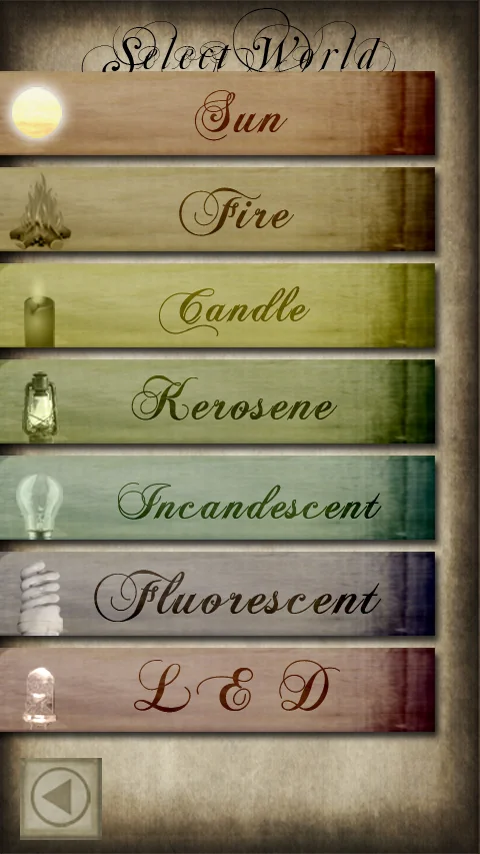
The History of Light - Worlds
The first mechanic mirrors the classic Lights Out interaction: clicking one light toggles the selected tile along with the tiles above, below, left, and right. Later worlds introduce additional behaviors. For example:
- the first world introduces bombs with countdowns, creating fail states tied to repeated interaction
- the Kerosene world expands toggling to diagonal neighbors, affecting all surrounding lights
- the final
L.E.D.world adds a surprise rule that forces the player to rethink assumptions built up across the rest of the game
The structure of the worlds was also intentionally cumulative. The first 20 levels of a world introduce the new mechanic in relative isolation, while the last 10 levels start combining it with systems from previous worlds. By the end of the game, the player is solving puzzles that require understanding how all six prior mechanics interact together.
Audio and Presentation
Version 1.3 also expanded the game's presentation. Each world received its own soundtrack rather than sharing a single audio identity across the entire experience. The release included music from multiple sources, with a large portion contributed by composer Brandon Morris, whose work helped give each world a more distinct mood.
Team and Studio
The History of Light was developed by BossCastle Studios, a small independent team consisting of Panagiotis Peikidis, Harris Peikidis, and Dimitris Xanthopoulos.

BossCastle
From a portfolio perspective, this project is a strong example of designing a puzzle game around a compact core interaction and then building variety through systematic rule changes, progression gating, and cumulative mechanical complexity rather than through content volume alone.